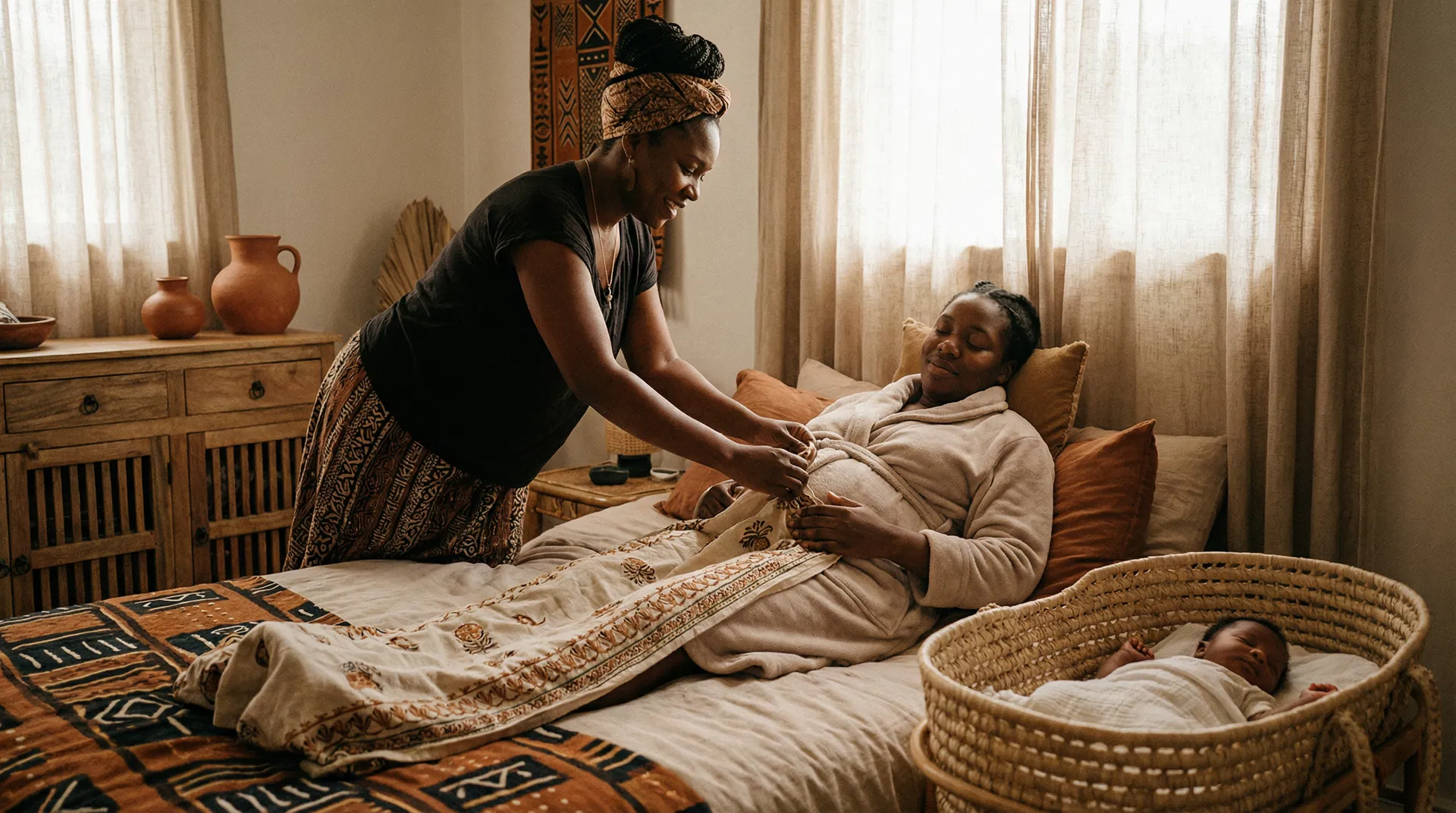
Reclaiming the Tradition of Postpartum Care
For centuries, African and African American communities practiced a rich tradition of postpartum care — one that honored the new mother, supported her recovery, and celebrated the arrival of new life through community, nourishment, and ritual. This advanced training reclaims and teaches these traditions alongside evidence-based practice.
The African American Postpartum Care training goes beyond standard postpartum education to explore the cultural, spiritual, and communal dimensions of the fourth trimester. Participants learn traditional practices like belly binding, herbal remedies, and healing foods while understanding the historical context that makes this work essential.
"When we care for the mother, we care for the entire community. This is the wisdom our ancestors knew."
In a healthcare landscape where Black mothers face disproportionate rates of postpartum complications, culturally competent postpartum care is not just traditional — it is transformative. This training equips you to bridge the gap between clinical care and cultural wisdom.
What You Will Learn
Historical Foundations
- African postpartum traditions across the diaspora
- The role of the community mother and granny midwife
- How colonization disrupted traditional postpartum care
- Reclaiming and preserving cultural birth practices
Physical Postpartum Care
- Belly binding techniques and cultural significance
- Postpartum massage and bodywork
- Herbal baths and healing preparations
- Nutrition for recovery and lactation
Emotional & Spiritual Support
- Postpartum mood disorders in communities of color
- Cultural approaches to mental health support
- Rituals and ceremonies for the postpartum period
- Building community support networks
Breastfeeding & Infant Care
- Breastfeeding support with cultural sensitivity
- Addressing breastfeeding disparities
- Traditional infant care practices
- Supporting the mother-baby dyad
Professional Practice
- Building a postpartum care practice
- Working within healthcare systems
- Advocacy for culturally competent postpartum care
- Integrating traditional and evidence-based approaches
Training Investment
Advanced Training Tuition
- Comprehensive curriculum materials
- Hands-on practice sessions
- Certificate of completion
- Continuing education credits
Honor the Tradition. Transform the Future.
Join a community of practitioners dedicated to reclaiming and advancing culturally competent postpartum care for all families.